

Post Surgery Instructions
These instructions provide general guidance following foot and ankle surgery. Your individual post-operative instructions may differ depending on the type of surgery performed and your medical circumstances. If you have been given specific instructions by Dr Phegan, the hospital, anaesthetist or other treating healthcare professional, please follow those instructions.
If you are unsure about any aspect of your care, please contact Dr Phegan’s rooms.
Rest and Elevation
The most important measures following surgery are to REST and ELEVATE your foot. This helps minimise post-operative swelling, bleeding and discomfort.
RICE: Rest, Ice, Compression and Elevation
REST
Swelling and a sensation of pressure in the foot are common during the first 24–48 hours following surgery. Resting and elevating your foot can help reduce these symptoms.
ICE
- Apply an ice pack or a bag of frozen peas for approximately 20 minutes at a time, every 4 hours, unless otherwise instructed.
- Always place a towel or other protective layer between the cold pack and your skin.
- Never apply ice directly to the skin.
- Do not use ice if you have been advised that it is unsuitable for your particular condition.
COMPRESSION
Use compression bandages or garments only if these have been recommended or supplied by your treating healthcare professional. Follow the instructions provided regarding their use.
ELEVATION
- Keep your foot elevated as much as possible for the first 10–14 days, particularly when swelling is present.
- When sitting or lying down, aim to keep your foot elevated above the level of your heart where practical.
- You may use pillows to support your foot and leg. Ensure that you remain comfortable and that there is no excessive pressure on the heel or other areas.
Pain Relief
Take your prescribed pain-relief medication as directed. Do not exceed the prescribed dose or frequency.
- If a local anaesthetic nerve block has been used, your foot may remain numb for up to 24 hours, although the duration varies between patients.
- Do not wait until the nerve block has completely worn off before commencing your prescribed pain medication, unless you have been specifically instructed otherwise.
- Take medication at the prescribed intervals and follow all instructions provided with your medications.
- Be aware that some pain medications may cause drowsiness. Do not drive, operate machinery or consume alcohol while taking medications that impair your alertness.
If your pain is severe, worsening, or not adequately controlled by the prescribed medication, please contact Dr Phegan's rooms or seek urgent medical assessment as appropriate.
Wound and Dressing Care
- Keep your dressings, cast or bandages clean and dry.
- Do not remove or alter your dressings unless you have been specifically instructed to do so.
- Wear your prescribed post-operative shoe or boot when walking, including around the house, unless instructed otherwise.
- Follow the instructions provided regarding whether your post-operative shoe or boot should be worn while sleeping.
- When showering or bathing, protect your dressings from water using an appropriate waterproof covering.
- Do not smoke or use nicotine products, as these can impair blood supply and wound healing and may increase the risk of complications.
Blood Clots and DVT
Foot and ankle surgery can increase the risk of venous thromboembolism (VTE), including deep vein thrombosis (DVT) and pulmonary embolism (PE). The level of risk varies between individuals and depends on factors including the type of surgery, mobility, medical history and other risk factors.
Dr Phegan will assess your individual risk and advise whether medication or other measures are required to reduce your risk of blood clots.
- Follow all instructions regarding weight-bearing and mobility.
- Maintain adequate hydration unless you have been advised to restrict fluids.
- Take any prescribed blood-thinning medication exactly as directed.
- Do not commence aspirin or any other medication for prevention of blood clots unless specifically instructed to do so by Dr Phegan or another treating healthcare professional.
- If you have a history of DVT, pulmonary embolism, a known clotting disorder, or other risk factors, ensure Dr Phegan is aware.
When to Seek Urgent Medical Attention
Seek immediate medical attention or attend your nearest Emergency Department if you experience:
- Shortness of breath, difficulty breathing or chest pain.
- Significant or unexplained swelling or pain in the calf or leg.
- Severe or rapidly increasing pain that is not relieved by prescribed medication.
- Significant or persistent bleeding from the wound or dressing.
- Increasing redness, warmth, swelling or discharge from the wound, particularly if associated with fever or chills.
- A high temperature or feeling significantly unwell.
- New numbness, loss of sensation, or a change in the colour or temperature of the foot that does not resolve or is concerning.
If you are concerned that you may have a medical emergency, do not wait for a response from the practice. Seek urgent medical attention.
Contact Us
If you have questions or concerns about your recovery, wound, medications, pain or post-operative instructions, please contact Dr Phegan's rooms on 07 5671 1120 or at info@drphegan.com. Our team will assist you or direct you to the appropriate healthcare service.
Your First Post-Operative Appointment
Your first post-operative appointment will usually be scheduled 10–14 days after surgery at Dr Phegan's private rooms.
This appointment will be a combined review with Dr Phegan and the wound care and physiotherapy specialists from Active Therapy.
During this appointment:
- Your wound and overall recovery will be reviewed.
- Sutures/stitches will usually be removed. Occasionally, some sutures may need to remain in place for longer.
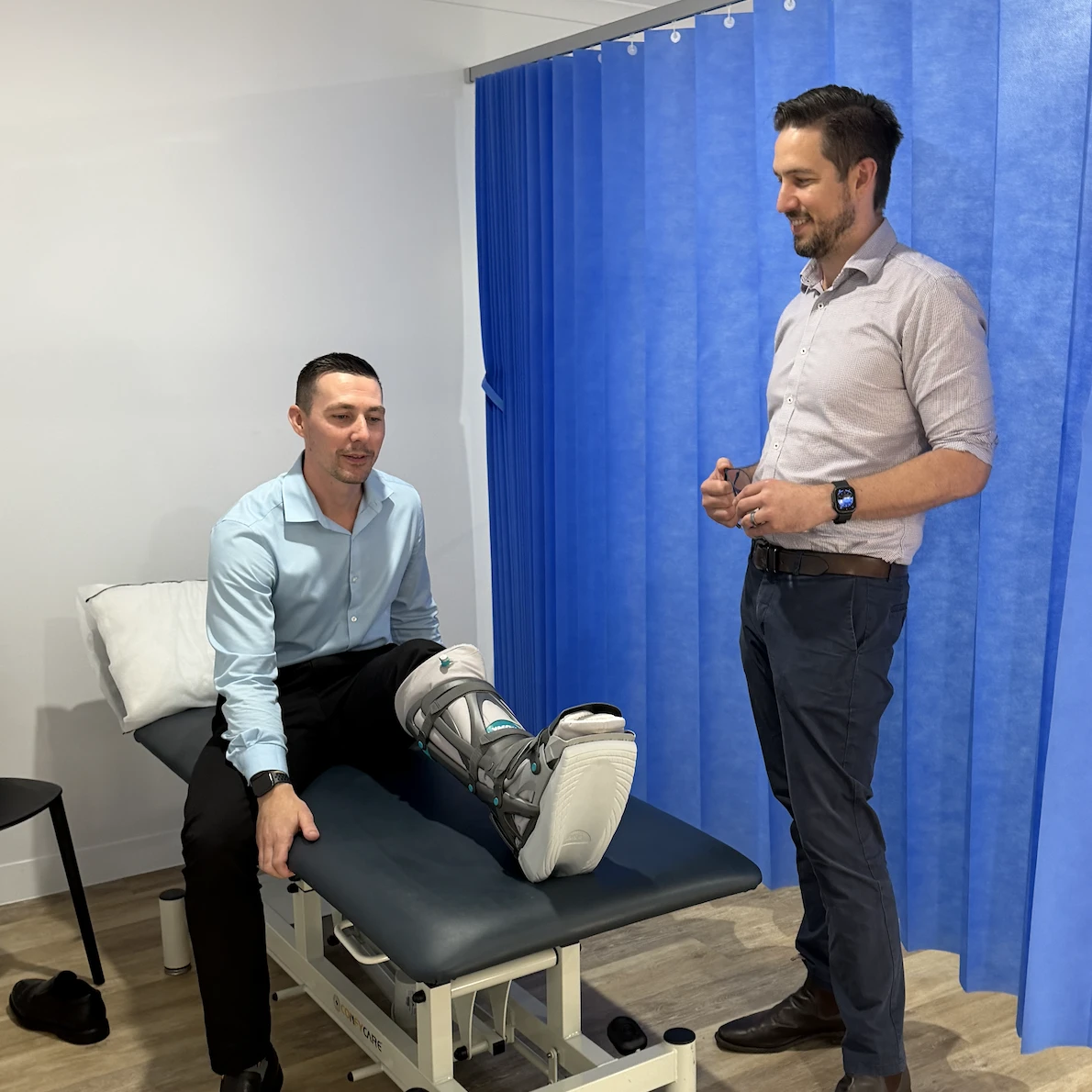
- Casts or slabs may be removed, and you may be transitioned into a post-operative boot, where appropriate.
- Active Therapy will provide any necessary dressings, wound care and equipment required for your ongoing recovery.
If you already have a suitable post-operative boot at home, please bring it with you to your appointment. If you do not have a boot, Active Therapy will provide the appropriate equipment if required.
Fees
There is no consultation fee from Dr Phegan for your first post-operative review.
Please note that fees may apply for the wound care and physiotherapy component of the appointment, which is provided by Active Therapy. If you have private health insurance, please bring your health insurance card with you so that any applicable rebates can be processed.
For information regarding Active Therapy's fees or services, please contact them directly:
Monday
9:00am – 4:00pm
Tuesday
9:00am – 4:00pm
Wednesday
9:00am – 4:00pm
Thursday
9:00am – 4:00pm
Friday
9:00am – 4:00pm
20 Nerang-Broadbeach Road
Nerang QLD 4211
Dr Phegan welcomes referrals for privately insured, self-funded, DVA and Work Cover patients.
Referrals accepted via Medical Objects, secure email or fax.
Website by: 